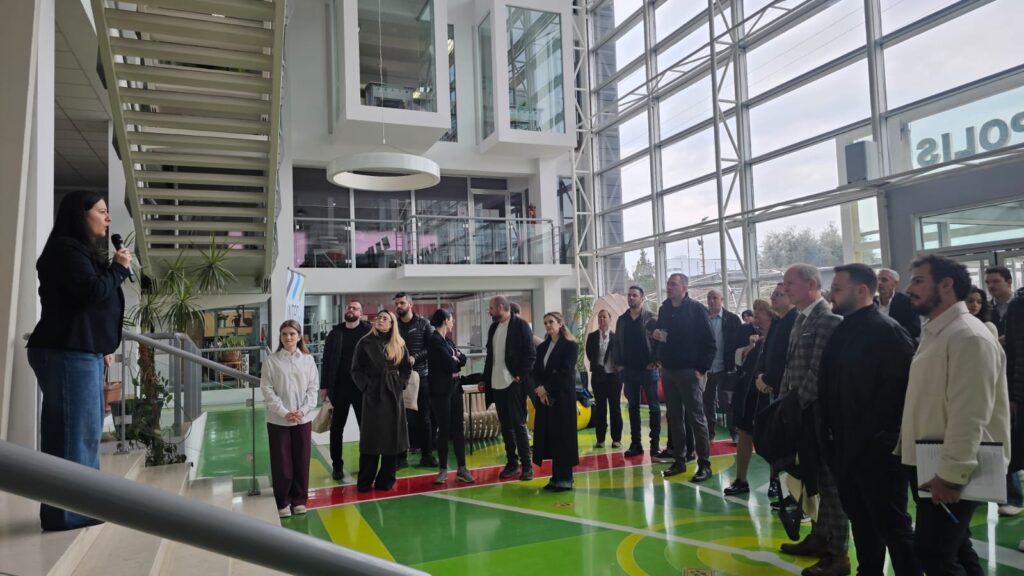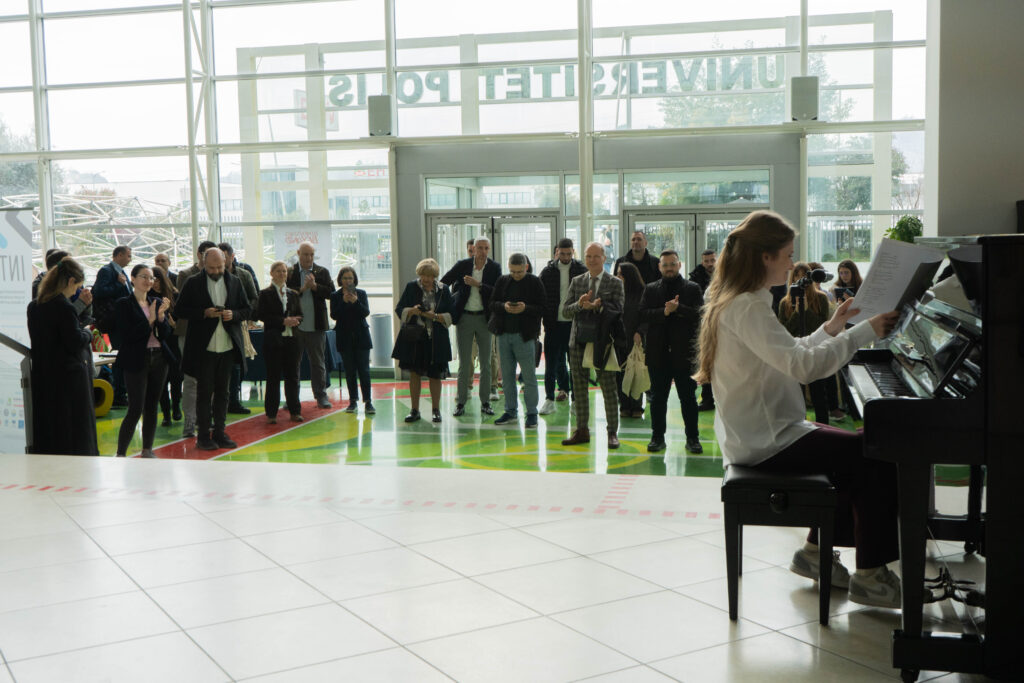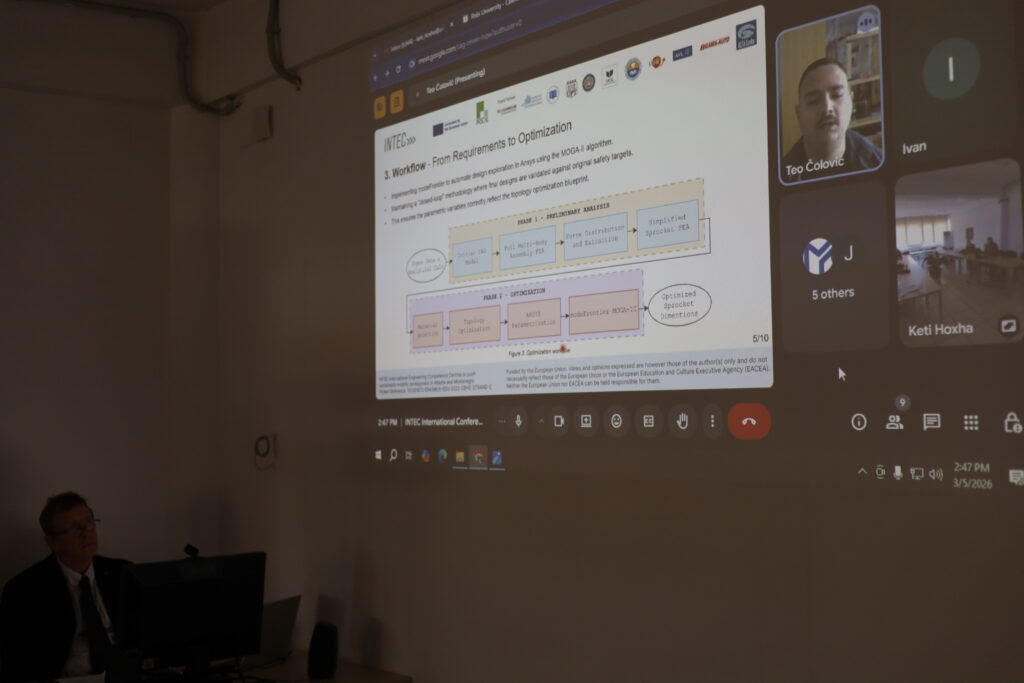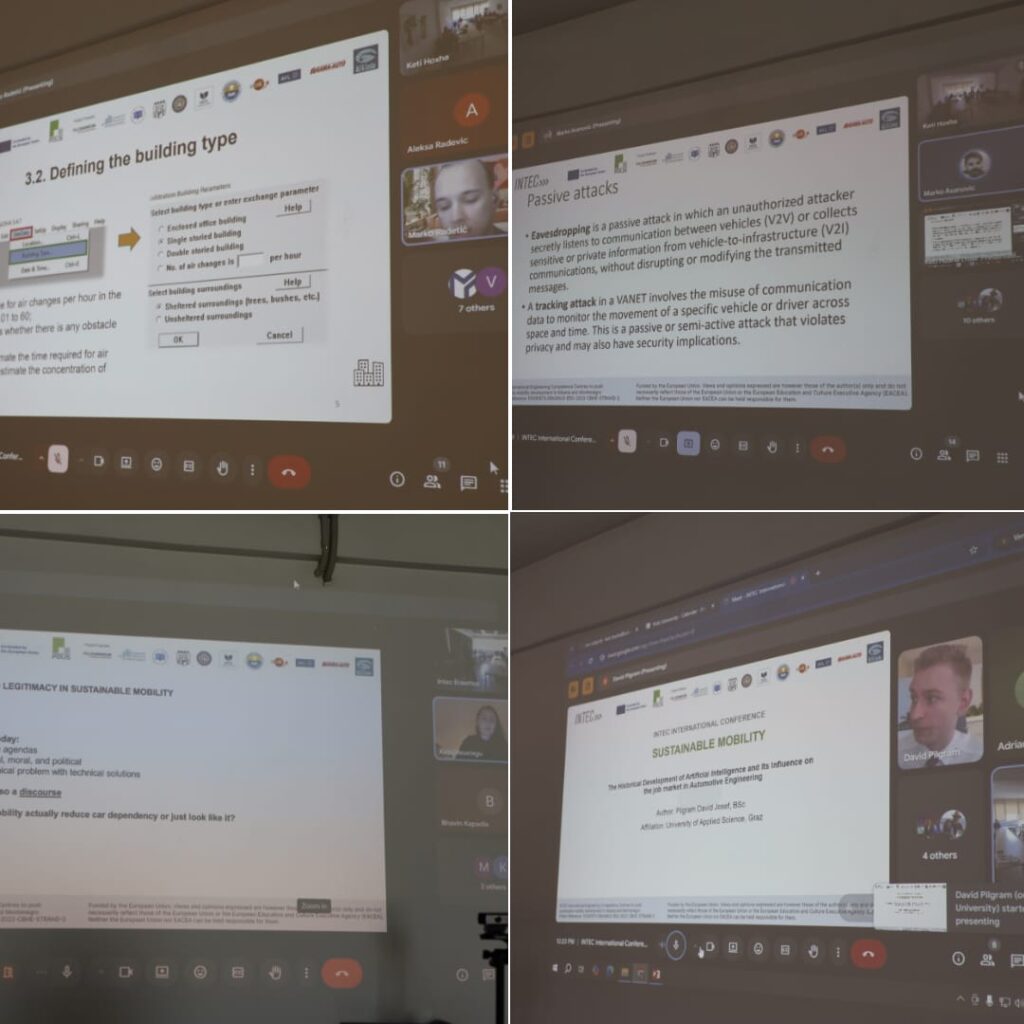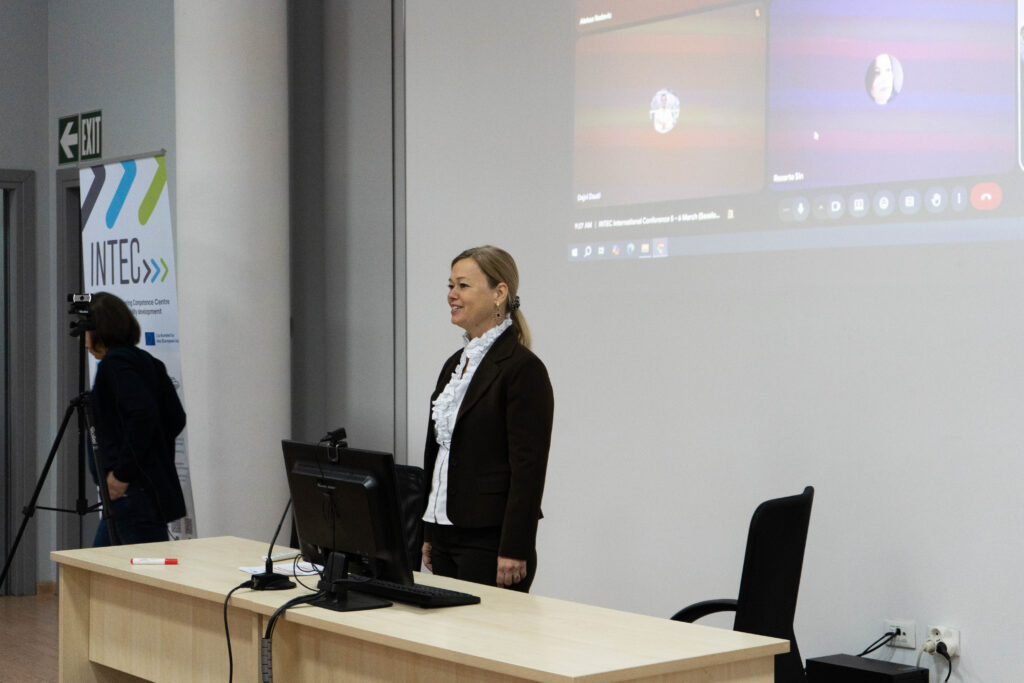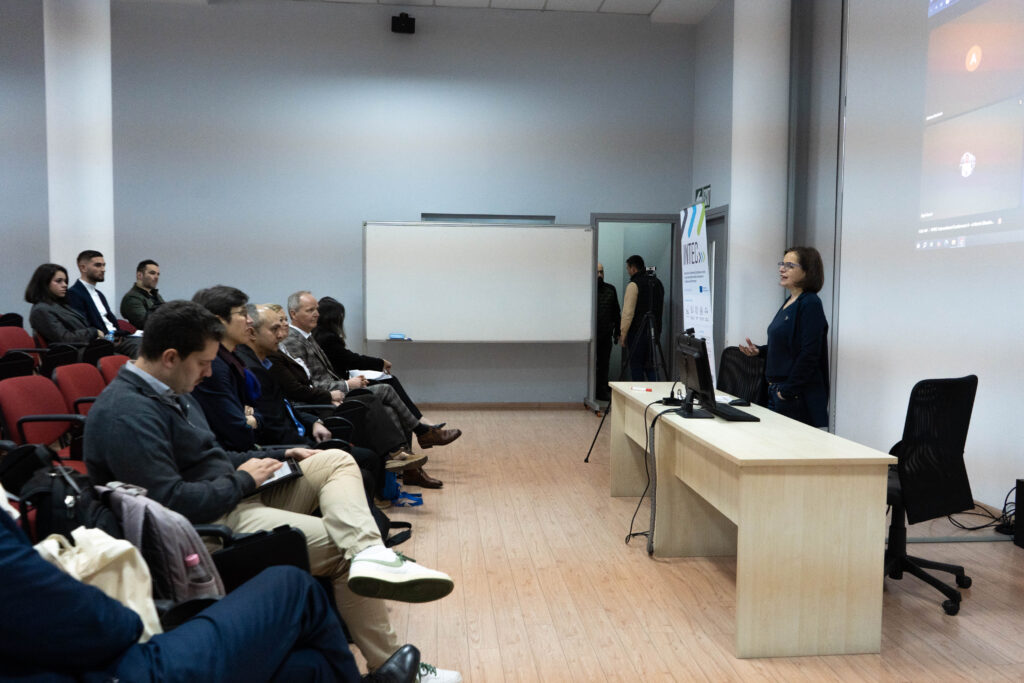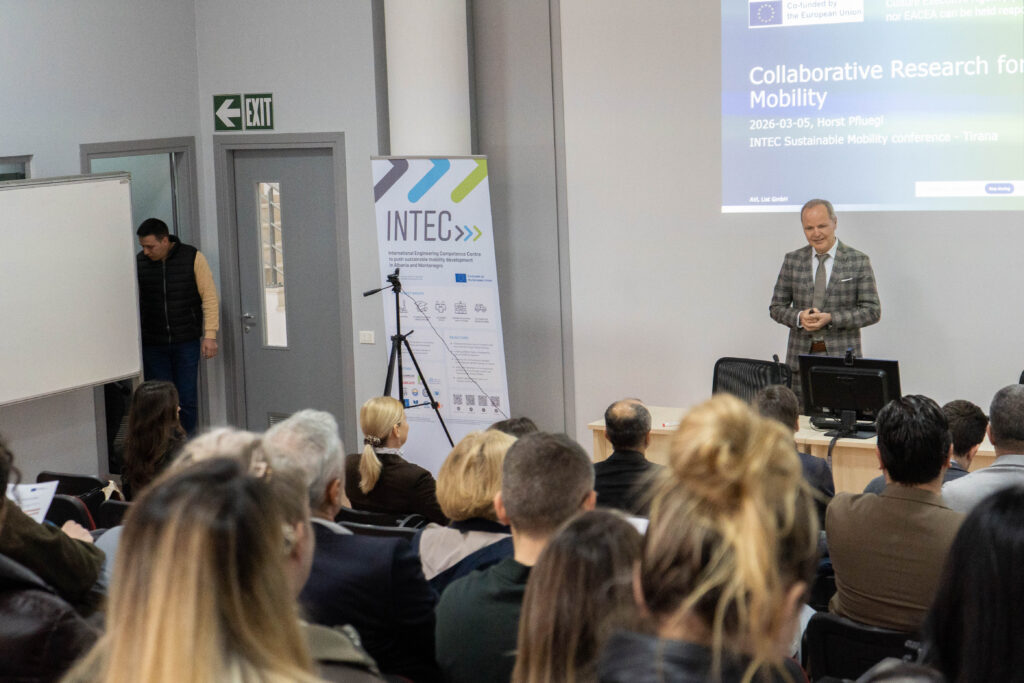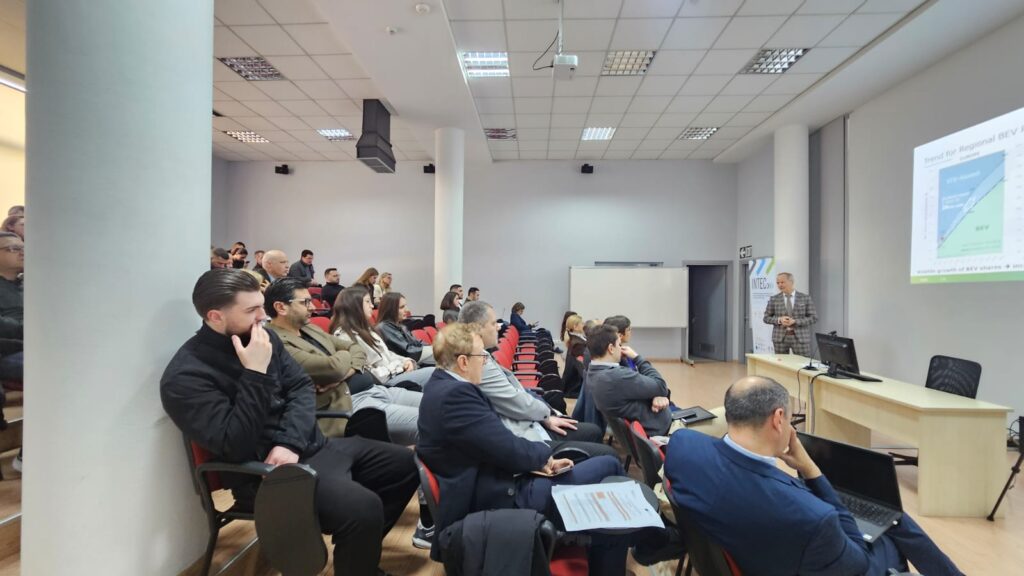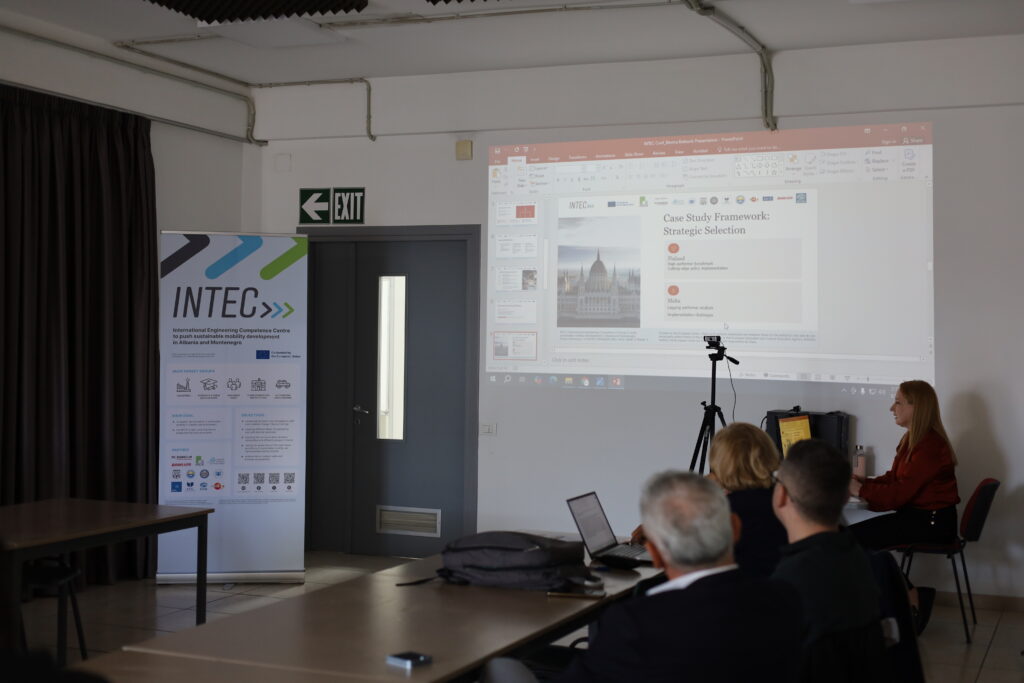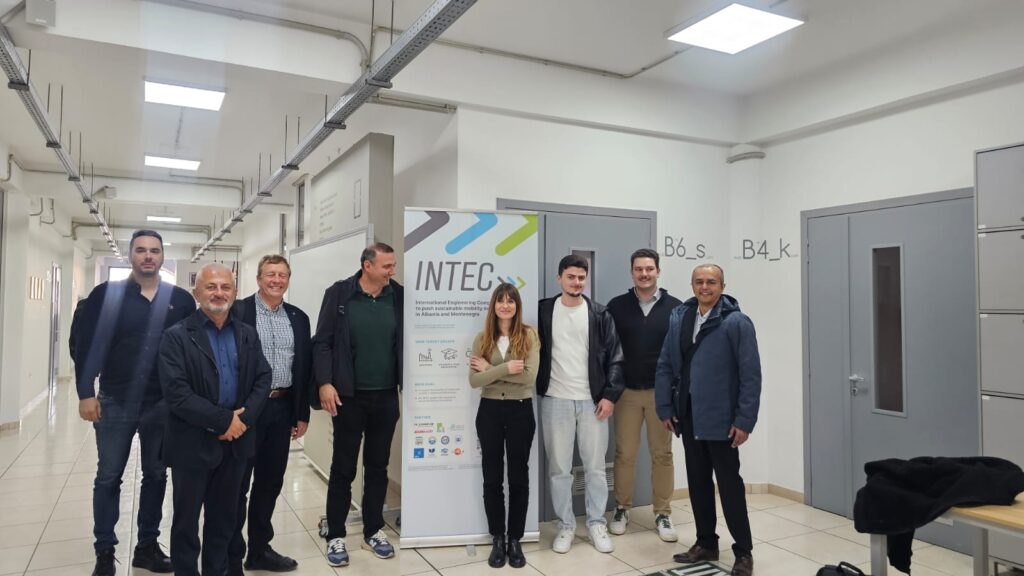
The INTEC international conference on sustainability was held on March 5 and 6, 2026, at POLIS university in Tirana, Albania, and gathered approximately 200 participants (on-line and on-site) representing academia, research institutions, public authorities, industry stakeholders, and students from Albania, Montenegro, and other European countries. The conference commenced on 5 March 2026 with registration and an opening performance, followed by the official welcome session.
Opening remarks were delivered by institutional representatives of POLIS University and the INTEC project coordination, who highlighted the strategic importance of sustainable mobility in the context of European policy priorities, including the European Green Deal, and emphasized the role of higher education institutions and international cooperation in supporting the green transition. The keynote session that followed provided high-level insights into collaborative research approaches for sustainable mobility and the institutional perspective on transport systems in Albania, thereby establishing a comprehensive framework for the thematic sessions.
The program continued with parallel sessions addressing key thematic areas relevant to sustainable mobility. The session on Political and Regulatory Framework focused on European Union policies, regulatory developments, and infrastructure readiness, with particular attention to the alignment of national frameworks with EU standards and directives. In parallel, the Technological Innovation session presented recent advancements in electric mobility, battery technologies, hydrogen-based solutions, and energy-efficient systems, highlighting the role of technological innovation in accelerating the transition toward sustainable transport. Additional contributions addressed autonomous vehicle technologies, energy consumption patterns, and the implementation of EU strategies at national level.
In the afternoon, the conference addressed economic and implementation-related aspects through the session on Economic and Business Perspectives, including case studies and good practices. Presentations explored the management of renewable energy resources, the feasibility of electric public transport solutions, and urban regeneration strategies linked to sustainable mobility. These contributions provided practical insights into the economic viability and scalability of sustainable mobility solutions, emphasizing the importance of integrated and context-specific approaches.
The second day of the conference, held on 6 March 2026, further expanded the scope of discussions by focusing on social, environmental, and forward-looking dimensions. Parallel sessions on Social and Environmental Impact examined lifecycle emissions, urban mobility planning, and the social implications of transport systems, highlighting the need for inclusive and environmentally responsible mobility strategies. The session on Future Scenarios addressed emerging trends such as the application of artificial intelligence in transport systems, smart mobility solutions, cybersecurity challenges, and the development of new competencies required in the evolving mobility sector.
The programme also included a dedicated session on Controversies and Challenges, which critically addressed barriers to the adoption of sustainable mobility solutions in the Western Balkan context. Topics included the uptake of electric vehicles, policy and regulatory challenges, the socio-economic implications of technological change, and the broader impact of digitalization and artificial intelligence on the mobility sector and labour market. These discussions contributed to a balanced and critical understanding of both opportunities and constraints associated with the green transition.
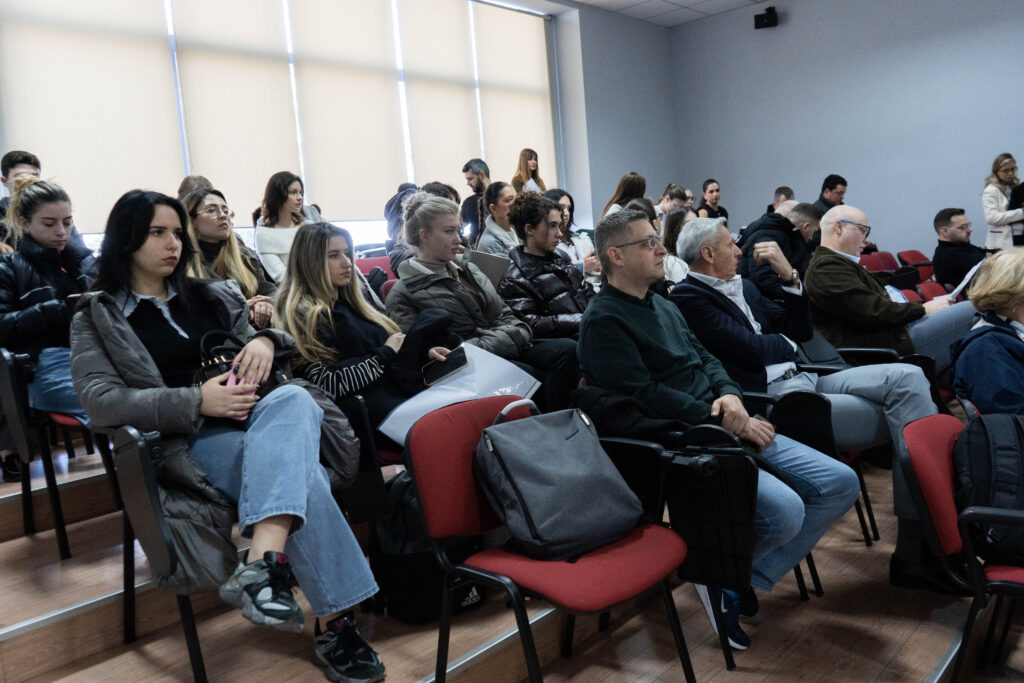
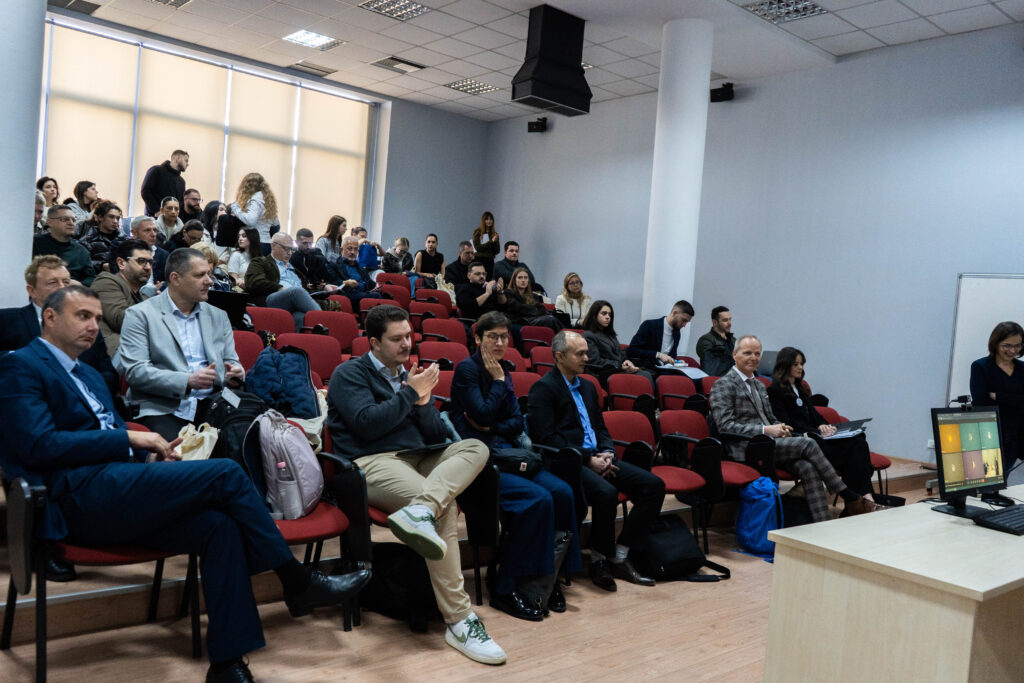
Throughout the conference, participants actively engaged in discussions, question-and-answer sessions, and networking activities, facilitating knowledge exchange and fostering collaboration among stakeholders. The participation of approximately 150 attendees contributed to a dynamic and interactive environment, enhancing the overall impact and outreach of the event.
In conclusion, the International Conference on Sustainable Mobility successfully fulfilled its objectives as a key dissemination and community-building activity within the INTEC project. The event contributed to increasing the visibility of project outcomes, promoting interdisciplinary dialogue, and strengthening cooperation between academia, industry, and public institutions. The high level of participation and the diversity of topics addressed confirm the relevance of sustainable mobility as a strategic priority and underline the importance of continued efforts to support the transition toward more sustainable, inclusive, and resilient transport systems in Albania, Montenegro, and the wider European context.